Start with why, end with how much
Nov 30, 2025Friday, the 28th, marked another anniversary for overproduction.
We deliberately write 'overproduction,' not 'overconsumption,' because it's not a demand-driven phenomenon. It's supply-driven; a strategy initiated to fuel growth.
It made us go back and look at two influential business frameworks had to say on the topic. Because frameworks matter. They frame what we can and cannot see, when we think business.
Today, we'll:
- Update Simon Sinek's start with why
- Update the Business Model Canvas
- Give you an example of why you don't need to be a Unicorn to have a large impact
Update Simon Sinek's start with why
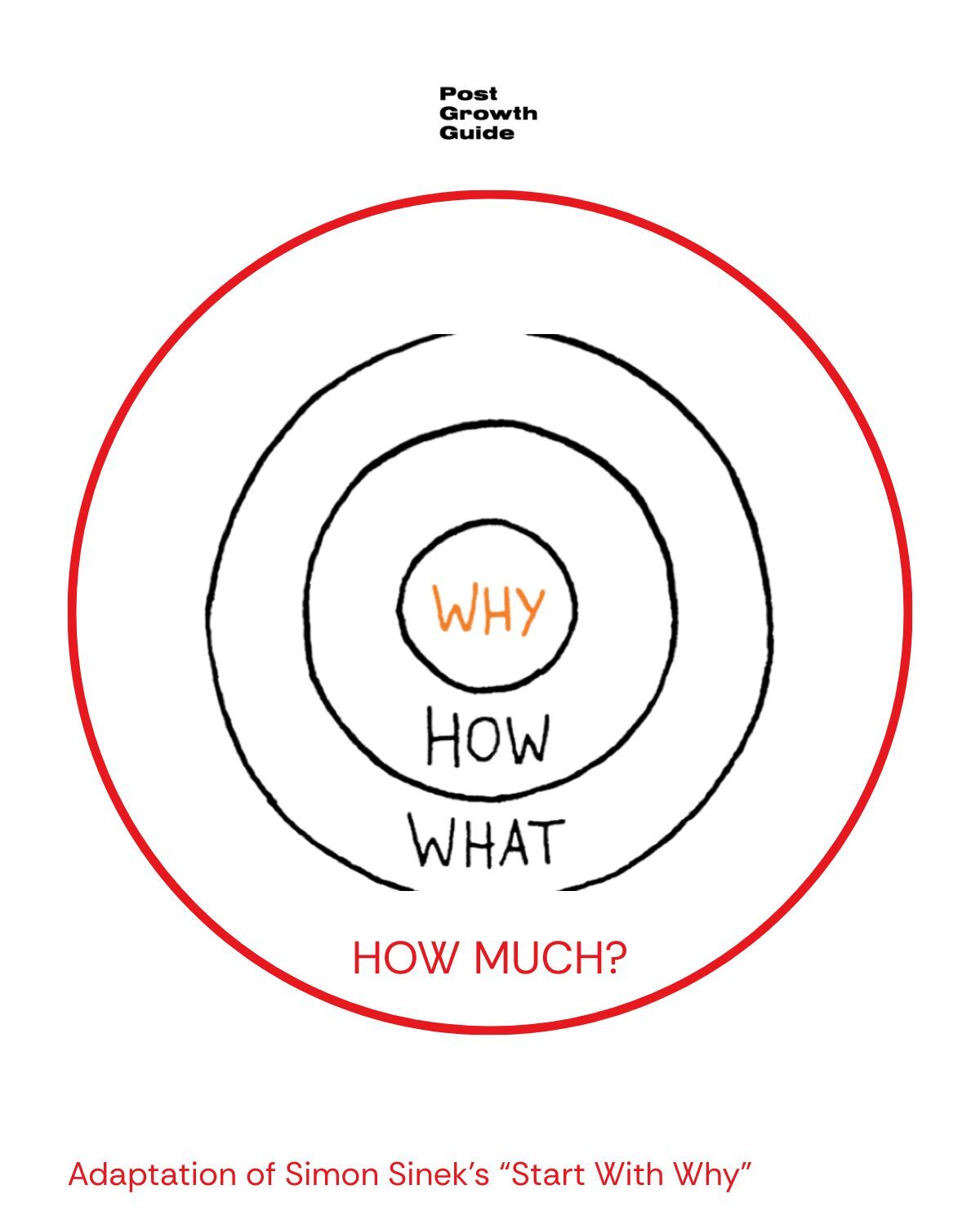
You can start by asking why. That still makes sense. But in today's world, where we are exceeding the planetary boundaries, and more growth equals more inequality, you cannot stop this exercise without asking "how much"?
How much is enough for you to pursue your why?
At what point does an increase in size require you to water down your why, or put the entire operation at too high a risk? Try it in your business and see how the "how much" changes, how you see your "why".
Update the Business Model Canvas
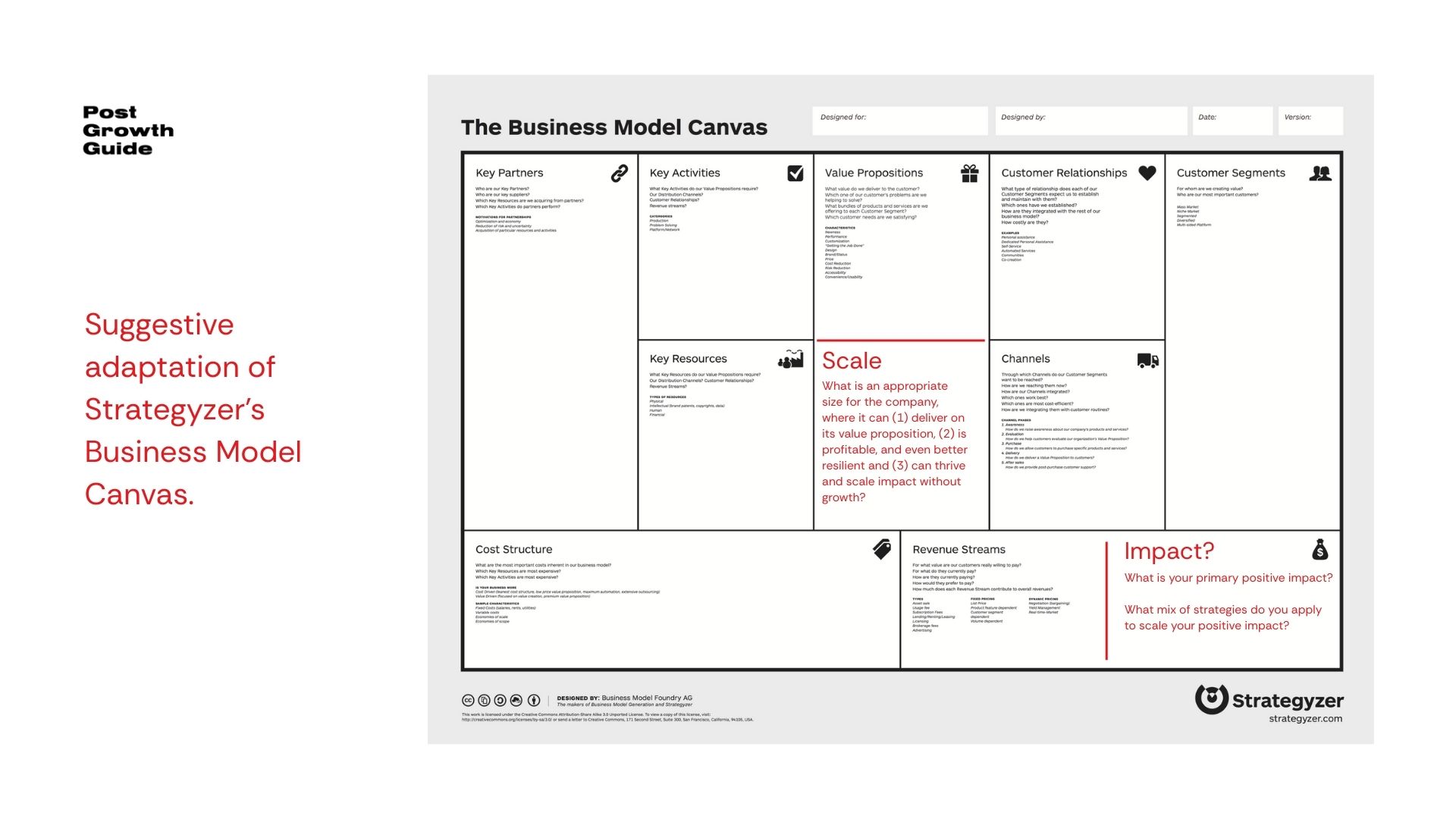
This was a little more complicated because this framework has more parts, but essentially, the question of scale fits into the middle of the Business Model Canvas, because it relates to the Value Proposition:
What is an appropriate size for the company, where it can (1) deliver on its value proposition, (2) be resilient, and (3) scale impact without growth?
And the in-depth question of impact should go at the bottom next to cost and revenue. It's just as important, and they are all interlinked:
What is your primary positive impact?
What mix of strategies do you apply to scale your positive impact?
Why you don't need to be a Unicorn to have a large impact
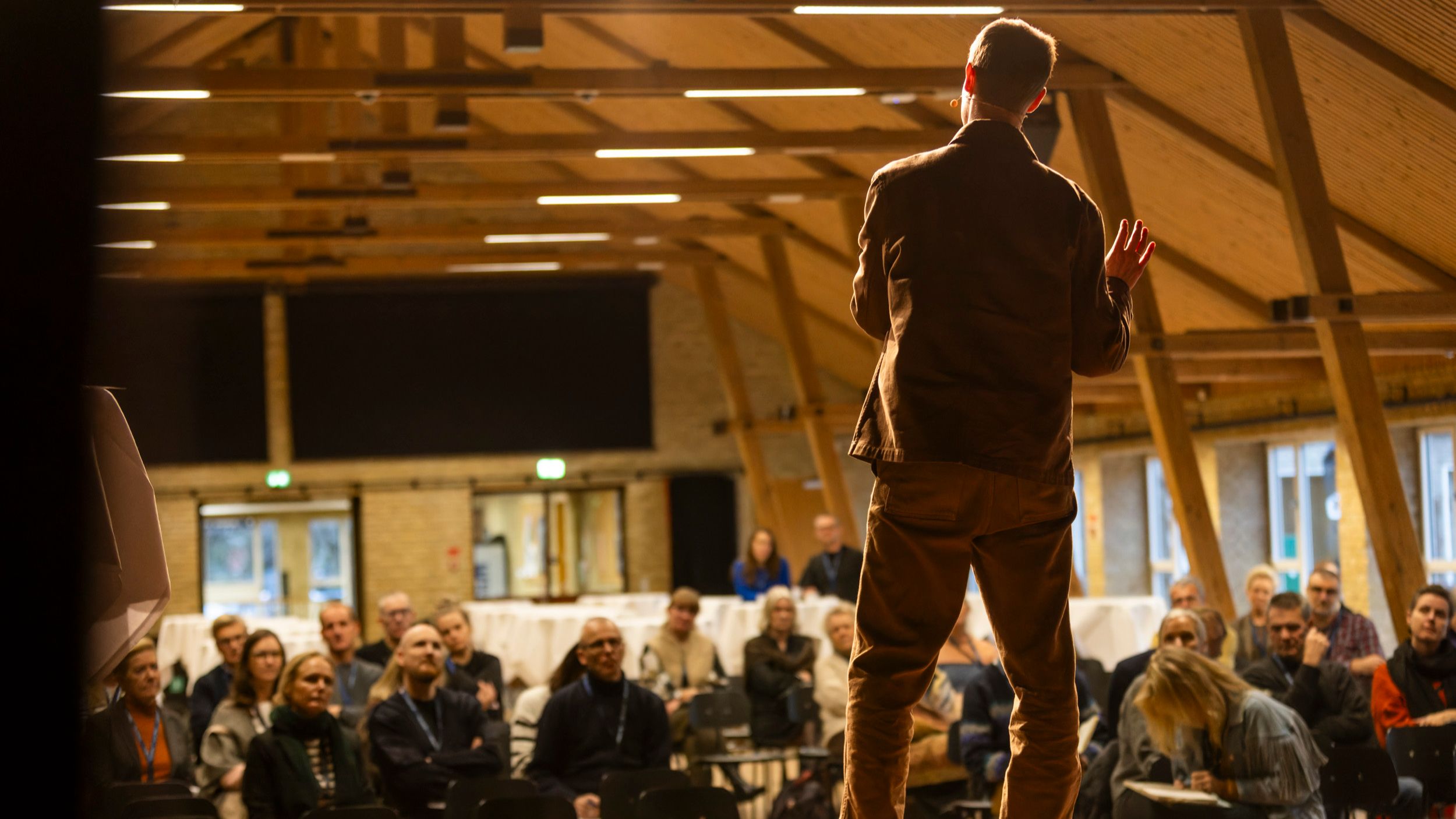
Marcus gave a talk this Monday for approximately 70 people at a conference. It was a mix of people from businesses, municipalities, and investors/capital funds.
Marcus talked about the problems of endless growth and the value of economies of small scale in the green transition.
He received this question from an impact investor. It went something like this:
I need your help with this question, because I don't have the answer. I tell the companies I invest in that limits can be good, and that it's better to be 20-30-50 people and do something that matters, than to chase meaningless air castles. But then they tell me that they need to become a Unicorn, otherwise they won't have enough impact. What do I tell them?
Marcus answered (he went on for a long time, couldn't stop, actually, so here is the short version):
We need to separate growth from scaling impact. Scaling impact is the overarching frame, and within that, growth can be one strategy. But at some point, you can scale your impact better by applying some of the other 7 scaling-impact-strategies. For example, look at those who open-access a supply chain, making it a strategy for scaling impact rather than keeping it secret to increase their own profits. They will scale their impact much faster than those who hide it.
This misconception that you have to grow to scale impact is one of the most critical barriers to overcome if you want your business to drive a radical green transition forward proactively.
That's why we have a mini-course dedicated to just that (8 minutes to get you started) and why we included two cases (iFixit and Tony's Chocolonely) on it in The Edge Playbook.
Get our weekly newsletter in your inbox.
Join 6,000+ business leaders exploring economies of small and growth independence. It's one email every Sunday.
We hate SPAM. We will never sell your information, for any reason.